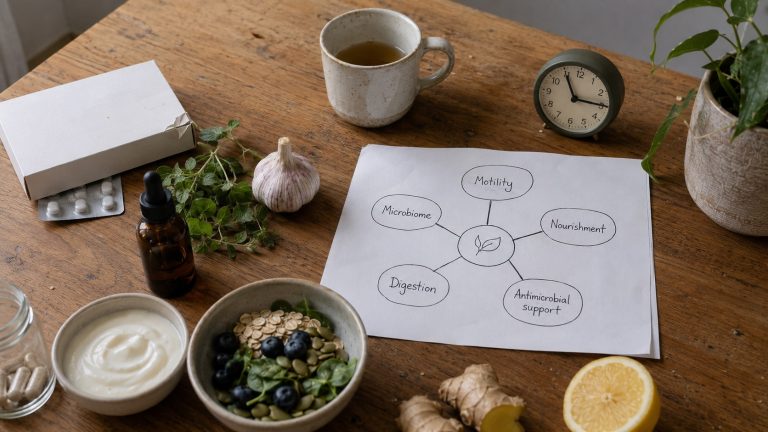
Hydrogen Sulphide SIBO: Why You’re Not Doomed

If you’ve been told you may have Hydrogen Sulphide SIBO, it probably hasn’t taken long for the internet/Reddit forums to make it sound like the worst possible version of SIBO.
You might have read that sulphur is toxic, that hydrogen sulphide damages the gut or that the bacteria involved are particularly difficult to remove. The treatment advice can be just as extreme- cut out sulphur-rich foods, take strong antimicrobials and prepare for a long recovery with a lot of restrictions.
Of COURSE this would leave you worried! Hydrogen sulphide can influence gut function when too much is produced in the wrong context, and some people experience severe digestive symptoms [1]. But having an H2S pattern does not mean you are being poisoned from the inside or that your gut is permanently damaged.
The most useful way to understand Hydrogen Sulphide SIBO is as another form of small intestinal dysbiosis. The types of microbes present, what they are doing and the environment around them matter more than simply having ‘too many bacteria’ [2]. This is part of the wider reason SIBO is not quite as straightforward as its name suggests.
What is Hydrogen Sulphide SIBO?
Hydrogen sulphide, usually shortened to H2S, is a gas produced naturally by both the body and certain gut microbes.
It is best known for its rotten-egg smell, but its role in the body is more complex than that description suggests. At controlled levels, hydrogen sulphide acts as a signalling molecule and may be involved in normal functions such as blood flow, motility and protection of the gut lining [3]. The presence of hydrogen sulphide is therefore not always a problem.
Difficulties may arise when sulphide-producing microbes become disproportionately active or hydrogen sulphide is produced faster than the gut can process it. Higher local concentrations may affect the cells lining the intestine, alter motility or contribute to pain and diarrhoea [3] [4].
Hydrogen sulphide SIBO may be an important part of the picture, particularly when symptoms such as bad abdominal pain, diarrhoea, urgency or sulphurous gas are present [4]. But it is unlikely to be the only thing going on. The more useful question is not simply whether hydrogen sulphide is high, but why hydrogen sulphide-producing microbes have become more active and whether the gut is able to keep that activity in balance. This keeps the focus on the wider dysbiosis rather than turning H2S into a separate, uniquely difficult condition (honestly, from experience, it is no harder to treat than any other type of SIBO, it just sometimes requires slightly different approaches).
Which bacteria produce hydrogen sulphide?
The sulphide-producing bacteria most often discussed in relation to H2S SIBO are Desulfovibrio species and Bilophila wadsworthia, but they do not produce hydrogen sulphide in exactly the same way [5] [6].

Desulfovibrio are sulphate-reducing bacteria. They use sulphate as part of their energy metabolism and release hydrogen sulphide as a by-product [5]. Bilophila wadsworthia relies on different sulphur-containing compounds, including taurine-derived compounds associated with bile [6]. This is why Bilophila is sometimes linked with diets higher in animal fat, which can alter the amount and composition of bile entering the intestine [7]. That does not mean that dietary fat or bile automatically causes H2S SIBO, or that you need to stop eating any fats to resolve H2S SIBO, but it does show how digestion, diet and microbial metabolism can interact.
Both organisms can be present in healthy guts, so their presence alone is not the problem. What matters is whether they have become disproportionately active, whether other microbes are supplying the substrates they use, and whether the gut environment is able to process the hydrogen sulphide they produce.
This is also why a stool microbiome test has clear limits. It may show that Desulfovibrio or Bilophila are present in the large intestine, but it cannot confirm that they are overactive in the small intestine or that they are responsible for a person’s symptoms.
Hydrogen sulphide production is rarely the work of one bacteria alone. Sulphate-reducing bacteria need hydrogen in order to produce hydrogen sulphide, so H2S levels are partly dependent on other microbes first generating that hydrogen through fermentation (hydrogen is also often raised in cases of H2S SIBO) [8]. Other bacteria may also release sulphur-containing compounds from food that can then be used by sulphide producers [9].
This cross-feeding means high hydrogen sulphide is often a feature of the wider microbial ecosystem rather than a simple overgrowth of one bad bacteria. Focusing only on eliminating Desulfovibrio or Bilophila may temporarily reduce one part of the pattern, but it does not explain why hydrogen and sulphur metabolism became unbalanced or what will stop the same microbial patterns from re-establishing themselves.
Why might sulphide-producing bacteria become more active?
Sulphide-producing bacteria are not necessarily pathogens or things which have to be entirely removed. Desulfovibrio and Bilophila can both be present in a healthy gut without causing problems. The issue is more likely to be that the environment has changed in a way that allows them, and the microbes feeding them, to become more active.
That change is rarely down to one factor.
Slower small-intestinal motility
The small intestine is designed to keep things moving. Food, digestive secretions and microbes all need to be carried onwards rather than left sitting in the same place for too long.
Between meals, the migrating motor complex creates waves of muscular contractions that help sweep residual food and microbes through the stomach and small intestine [10]. If those waves are weaker or less frequent, bacteria have more time to remain in the small intestine, ferment nutrients and feed into the hydrogen sulphide pathway [11].
Poor motility doesn’t automatically cause H2S SIBO, but it can create the kind of environment in which small intestinal dysbiosis is much easier to maintain. This is why understanding how the migrating motor complex supports small intestinal clearance is often more useful than focusing on the gas result in isolation.
Changes in digestive function
Stomach acid, bile and pancreatic enzymes do more than break food down. They also shape which microbes survive, what reaches the small intestine and which nutrients are available for fermentation [12].
If digestion is not working as well as it should, the microbial food supply changes too.
Bilophila is particularly relevant here because it can use sulphur-containing compounds linked with bile [6]. That does not mean bile is harmful or that eating fat is the direct cause of Hydrogen Sulphide SIBO, but it means digestion, diet and microbial metabolism are closely connected, and the same meal may be handled very differently depending on the person’s wider gut environment.
Antibiotic exposure
Antibiotics can be necessary and genuinely helpful, but they do not only affect the bacteria we are trying to remove. They can also reduce the microbes that normally compete with and keep opportunistic species in check [13].
For some people, this creates more space for sulphide-producing bacteria, or the hydrogen-producing microbes they depend on, to become more abundant.
This is one reason repeated antimicrobial treatment does not always lead to lasting change. Reducing bacteria may alter the numbers temporarily, but it doesn’t rebuild the balance and competition that help keep hydrogen sulphide production under control.
Reduced microbial resilience
Microbes don’t work alone! They feed one another, compete for nutrients and change the environment around them.
Hydrogen sulphide production is a good example of this. Sulphate-reducing bacteria need hydrogen, so high H2S depends partly on other microbes producing enough hydrogen through fermentation. Other bacteria may also release the sulphur-containing compounds that sulphide producers use.
When diversity and microbial competition are reduced, these cross-feeding relationships may become more dominant [9]. This is why I see Hydrogen Sulphide SIBO as a form of dysbiosis rather than an infection caused by one rogue bacteria.
The question is shouldn’t be how we kill Desulfovibrio or Bilophila, but instead, ‘what changed in the wider gut environment, and what would help restore enough balance that these microbes no longer dominate the picture?’
What are the symptoms of Hydrogen Sulphide SIBO?
Hydrogen Sulphide SIBO is most often associated with diarrhoea, although symptoms can vary considerably from person to person [14].
Common digestive symptoms include:
- loose stools or persistent diarrhoea
- sudden bowel urgency
- frequent bowel movements
- abdominal pain or cramping
- bloating and visible distension
- excessive wind
- sulphurous or rotten-egg-smelling gas
- nausea
- burping
- acid reflux
- a heavy or unsettled feeling after meals
- food feeling as though it is fermenting quickly
- sensitivity to high-sulphur foods (e.g. meat, garlic, onions)
- mixed bowel habits, with periods of diarrhoea and constipation
- constipation in some cases (rarer, but not unheard of)
- stools that are unusually foul-smelling
- symptoms that worsen after protein-rich meals
Diarrhoea has the clearest researched link with higher hydrogen sulphide production, probably because hydrogen sulphide affects intestinal movement, secretion and sensitivity, making stools looser and increasing urgency [3].
Rotten-egg smelling wind is probably the symptom most people associate with H2S SIBO, but actually not everyone experiences it. Some hydrogen sulphide is absorbed or broken down inside the gut before it leaves the body, so the gas may be present even without an obvious smell.
People also commonly report symptoms beyond the digestive tract, including:
- fatigue
- brain fog
- headaches
- dizziness or light-headedness
- weakness
- poor concentration
- feeling unusually unwell after meals
- increased food reactions
- histamine intolerance
- skin symptoms such as flushing or rashes
- muscle aches
- reduced appetite
- weight loss
For many people, the symptom pattern feels more intense than the bloating and discomfort usually associated with SIBO. Diarrhoea may be more urgent, the abdominal pain more severe and the reactions to food more immediate. This may be linked to the way higher local levels of hydrogen sulphide affect the gut lining, intestinal movement and nerve signalling, rather than simply to the amount of gas being produced [4].
The overall picture can therefore be quite broad. Some people mainly experience diarrhoea and sulphurous wind, while others notice a combination of gut symptoms, fatigue, food reactions and a general sense that their whole system is struggling. I have certainly noticed clinically that hydrogen sulphide SIBO is more likely to present with more systemic symptoms than hydrogen or methane SIBO.
Is Hydrogen Sulphide SIBO worse than other types?
It can feel worse, particularly when diarrhoea, urgency and abdominal pain are prominent.
Hydrogen sulphide is sometimes described as a toxin, but the amount produced in the gut is not comparable to inhaling concentrated industrial gas. At normal levels, H2S has useful signalling roles, while at higher local levels, it may affect cellular energy production, the mucus layer and the intestinal lining [1].
This may help explain why some people experience more intense diarrhoea, cramping or urgency. But Hydrogen Sulphide SIBO is not necessarily more serious or harder to treat than other forms of dysbiosis. In clinic, I haven’t found it any more challenging when the wider drivers are properly addressed and the treatment is tailored to the individual. How severe someone feels still depends on the whole picture, including motility, digestion, visceral sensitivity and the balance of the microbiome.
How is H2S SIBO diagnosed?
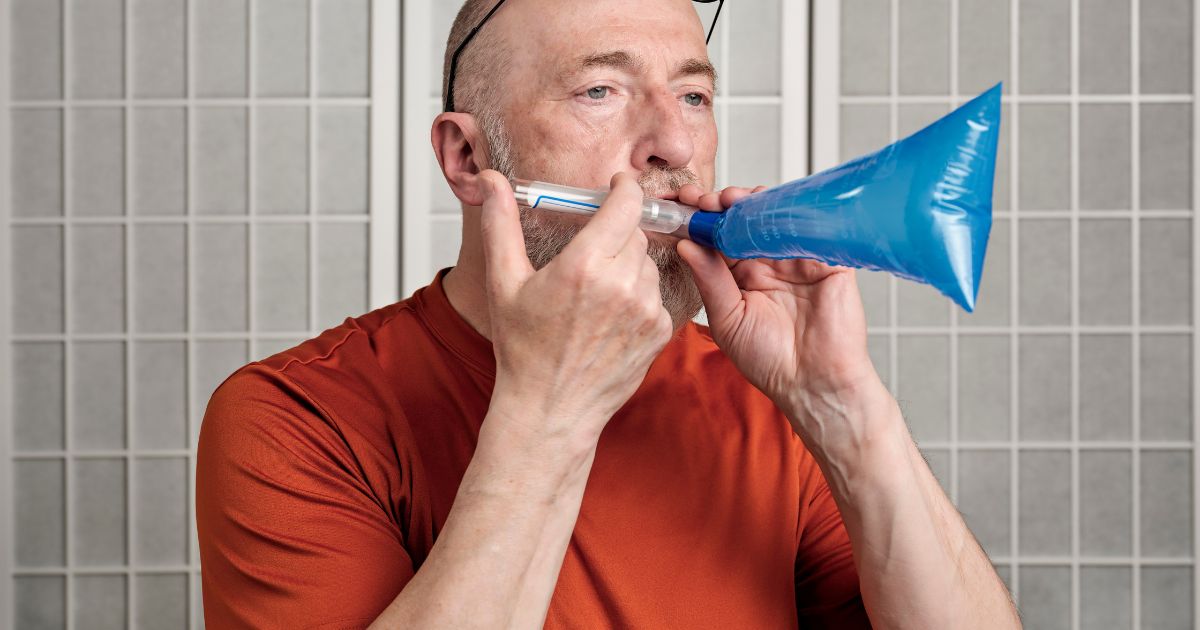
Testing Hydrogen Sulphide SIBO is still far from straightforward.
A standard SIBO breath test measures hydrogen and methane after drinking glucose or lactulose. A very low or flat-line result is often interpreted as a possible sign of Hydrogen Sulphide SIBO because sulphate-reducing bacteria use hydrogen to produce hydrogen sulphide. If that hydrogen is being consumed as quickly as it is made, very little may remain to appear on a standard two-gas test [15].
The Trio-Smart breath test is a newer SIBO breath test which measures hydrogen sulphide alongside hydrogen and methane, making it the most direct breath-testing option currently available [4]. However, breath testing is still an indirect and fairly unreliable way of assessing the small intestine. Results can be affected by transit time, test preparation, the sugar used and whether fermentation is happening in the small or large bowel – for this reason I tend not to order SIBO breath tests in clinic very often.
Stool microbiome testing may identify sulphide-producing bacteria such as Desulfovibrio or Bilophila, but it mainly reflects the large intestine. It cannot confirm that these bacteria are overactive in the small intestine or diagnose H2S SIBO [16].
Do you need to avoid sulphur?
Usually, no.
Sulphur is an essential nutrient found in foods such as eggs, meat, dairy, legumes, garlic, onions and cruciferous vegetables. Cutting all of these out can make your diet very restrictive very quickly and be actively harmful for your health [17].
A very short reduction in the foods that clearly trigger sulphurous gas may be useful for a couple of days while symptoms are particularly intense. I would not recommend a longer low-sulphur diet, as there is no evidence that it treats H2S SIBO and it can reduce both food variety and nutritional intake.
If removing eggs, garlic or broccoli helps, that tells us those foods are harder to tolerate right now -it does not mean they caused the dysbiosis or need to be avoided long term. This is why restrictive SIBO diets can reduce symptoms without resolving why the gut became reactive.
Can fibre help Hydrogen Sulphide SIBO?
Yes, fibre can be particularly helpful in Hydrogen Sulphide SIBO.
Sulphide-producing bacteria such as Bilophila tend to thrive in an environment higher in saturated fats and bile acids [7]. Soluble fibre can help bind excess bile acids, support regular bowel movements and feed beneficial bacteria that may outcompete hydrogen sulphide producers [18].
Fibre also supports the production of short-chain fatty acids, including butyrate, which helps create a healthier and more resilient gut environment [19].
The key is to build it up gradually. Large amounts of fermentable fibre can initially worsen bloating, gas or diarrhoea, particularly in a very reactive gut, so the type and dose need to match the person.
The same principle applies to using probiotics to change microbial balance: the aim is not simply to add more bacteria, but to help beneficial species compete more effectively and shift the wider microbiome.
Can bismuth help?
Yes. I think bismuth can be a very useful part of a Hydrogen Sulphide SIBO treatment protocol, particularly in the short term.
Bismuth binds hydrogen sulphide in the gut, which can help reduce sulphurous gas, diarrhoea and urgency while the wider drivers of the dysbiosis are being addressed. A small human study found that bismuth subsalicylate markedly reduced hydrogen sulphide release in the colon, and I have seen it have real benefits for some H2S SIBO patients [20].
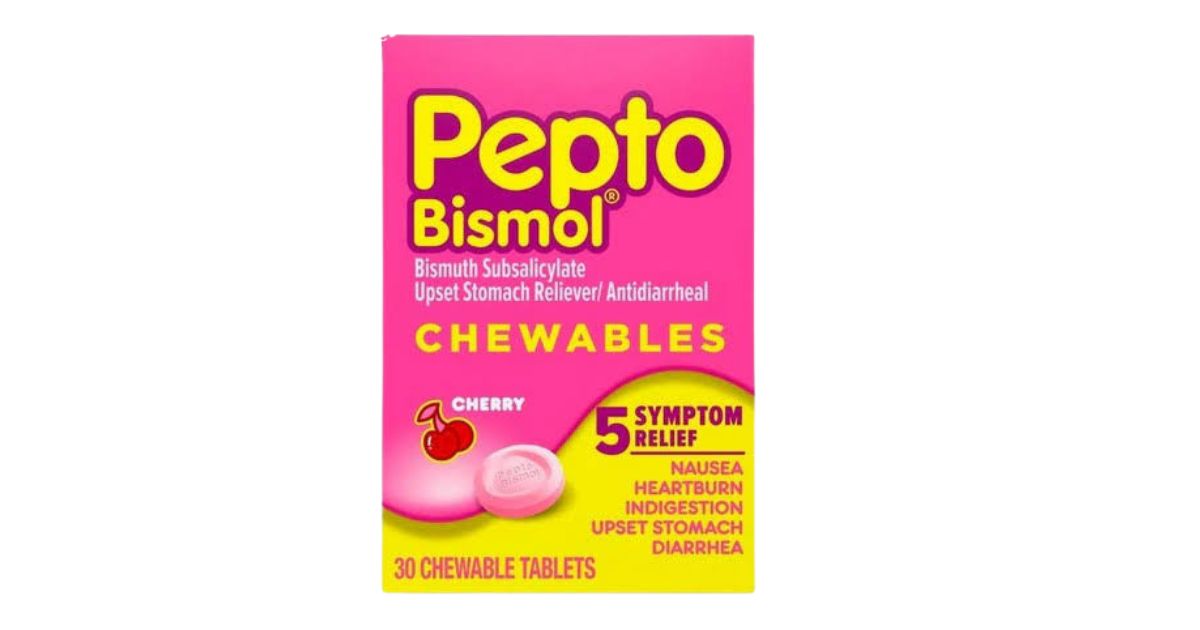
I do not see it as a long-term solution or a treatment to use on its own. It works best as one part of a wider strategy that may include improving gut-brain signalling, supporting small intestinal motility and rebuilding microbial balance, alongside appropriate digestive and fibre support.
Bismuth subsalicylate is still a medicine and is not suitable for everyone, so it is worth checking with a practitioner whether it is appropriate for you before self-prescribing.
How is Hydrogen Sulphide SIBO treated?
The foundations of treatment are the same as for any other form of SIBO: address the reasons the dysbiosis developed, then make a few targeted adjustments for hydrogen sulphide.
That means looking at the factors associated with recurring SIBO, including motility, digestion, nutrition, medication history and microbial diversity/resilience. If these remain unchanged, reducing sulphide-producing bacteria may only lead to temporary improvement.
In terms of targeted treatment, rifaximin can be useful for Hydrogen Sulphide SIBO, while oregano oil can be one of the more effective herbal antimicrobial options. Adding bismuth for a short period can help bind hydrogen sulphide, and carefully chosen probiotics can help restore microbial competition.
These can all be useful tools, but they work best alongside treatment of the underlying drivers rather than instead of it. A useful SIBO treatment plan needs to improve the gut environment as well as reduce bacterial activity, otherwise the same pattern is more likely to return.
This is also why repeated antimicrobial treatment can fall short, even when rifaximin, oregano oil or another product has been well chosen -the H2S-specific tweaks can help, but treating the root causes is still the most important part.
To sum up:
Hydrogen Sulphide SIBO can cause significant digestive symptoms, particularly diarrhoea, urgency, pain and rotten-egg gas. But it is not automatically a more severe or harder to treat form of SIBO, and it does not mean you are being poisoned from the inside.
Desulfovibrio and Bilophila wadsworthia may contribute to hydrogen sulphide production, but neither is inherently harmful. The problem is the wider microbial and digestive environment that allows sulphur metabolism to become unbalanced.
Treatment may include short-term bismuth, carefully chosen fibre, probiotics, rifaximin or oregano oil. These can all be useful, but none replaces the need to address motility, digestion, nutrition, microbial resilience and the other factors that allowed the dysbiosis to develop.
You are NOT DOOMED if you have Hydrogen Sulphide SIBO. Microbial patterns can change, food tolerance can improve and these bacteria do not need to be eradicated completely. The goal is to restore an environment in which hydrogen sulphide production no longer dominates.

I’m Lucy, a Nutritional Therapist specialising in gut health, including SIBO, IBS, functional dyspepsia and histamine-related symptoms. I work with people who feel stuck with ongoing digestive issues despite trying diets, supplements, or standard protocols. My approach focuses on identifying root causes and restoring gut function, alongside supporting the nervous system, rather than relying on restrictive or short-term fixes.
If you’re struggling with persistent gut symptoms and not getting answers, you can book a free gut support call to discuss what you’re experiencing and whether one of my programmes could be the right fit for you.
References:
- https://pmc.ncbi.nlm.nih.gov/articles/PMC11990059/
- https://www.nature.com/articles/s41467-019-09964-7
- https://pmc.ncbi.nlm.nih.gov/articles/PMC3910452/
- https://pmc.ncbi.nlm.nih.gov/articles/PMC13045808/
- https://pmc.ncbi.nlm.nih.gov/articles/PMC10383351/
- https://pmc.ncbi.nlm.nih.gov/articles/PMC6386719/
- https://pmc.ncbi.nlm.nih.gov/articles/PMC3393783/
- https://link.springer.com/article/10.1007/s10620-022-07743-x
- https://pmc.ncbi.nlm.nih.gov/articles/PMC10507020/
- https://www.nature.com/articles/nrgastro.2012.57
- https://onlinelibrary.wiley.com/doi/abs/10.1111/j.1365-2796.1995.tb01196.x?sid=nlm%3Apubmed
- https://www.thieme-connect.com/products/ejournals/abstract/10.1055/a-2205-5794
- https://pmc.ncbi.nlm.nih.gov/articles/PMC3063582/
- https://pmc.ncbi.nlm.nih.gov/articles/PMC9722381/
- https://pmc.ncbi.nlm.nih.gov/articles/PMC10496284/
- https://pmc.ncbi.nlm.nih.gov/articles/PMC10120449/
- https://pmc.ncbi.nlm.nih.gov/articles/PMC2198910/
- https://pmc.ncbi.nlm.nih.gov/articles/PMC10413438/
- https://pmc.ncbi.nlm.nih.gov/articles/PMC9268559/
- https://pubmed.ncbi.nlm.nih.gov/9558280/