Do Antimicrobials Cure SIBO? Why Symptoms Often Come Back
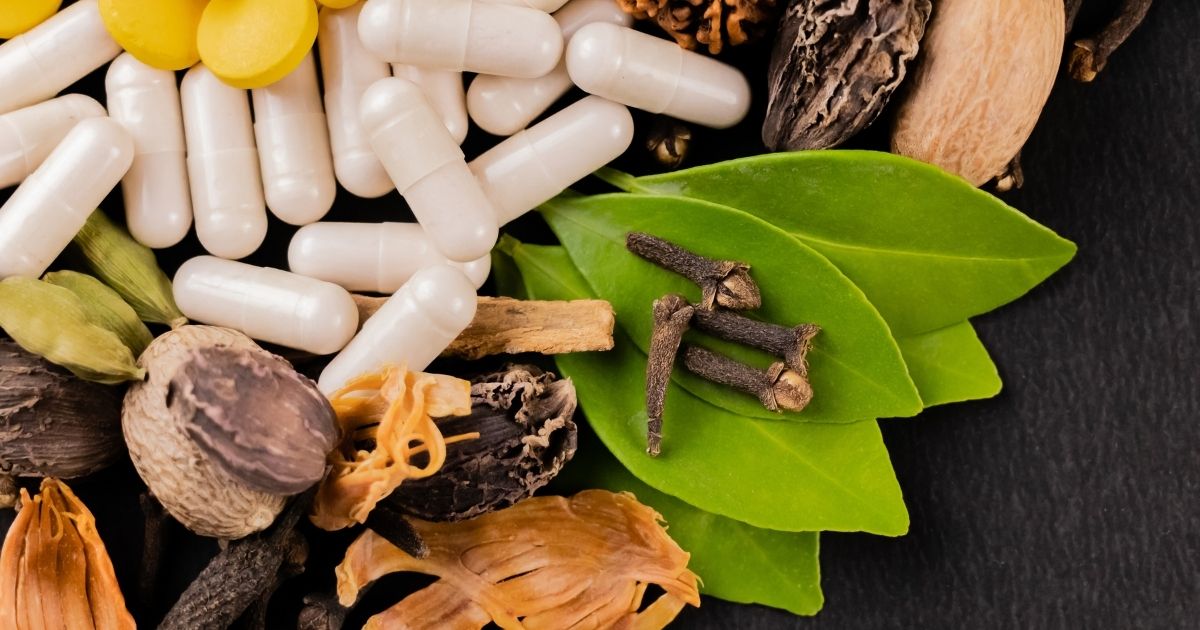
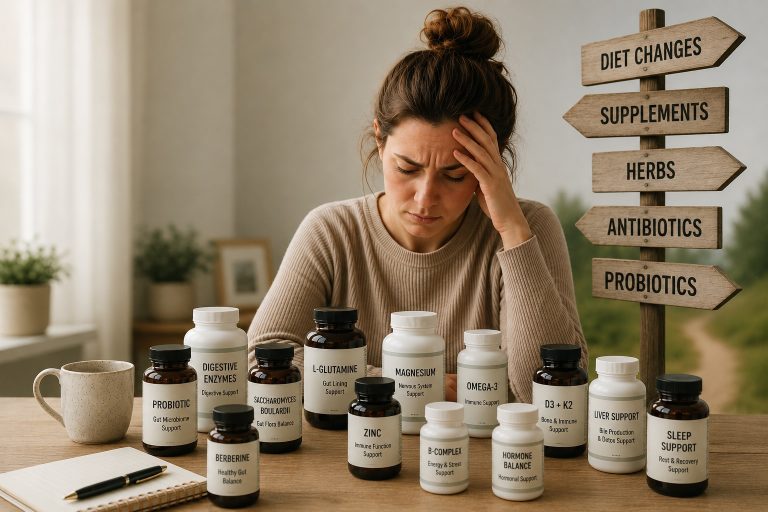
If you’ve spent any time looking into SIBO treatment, you’ve probably come across antibiotics or herbal antimicrobials. They’re often presented as THE answer. Kill the bacteria and your symptoms should disappear.
It’s easy to see why so many people come away believing that antimicrobials cure SIBO. Sometimes they do seem to work, but many people either notice very little improvement or feel better for a few weeks before everything comes back.
If your SIBO treatment isn’t working, it doesn’t necessarily mean you chose the wrong antimicrobial. It may simply mean that antimicrobials were never designed to fix the whole problem. The problem was never simply the bacteria. It was the environment that allowed them to become a problem in the first place.
That’s why I don’t see them as the foundation of SIBO treatment, but instead as one tool among many to use when resolving SIBO for good.
Why people think antimicrobials cure SIBO
If we think of SIBO as simply ‘too many bacteria in the small intestine’, antimicrobials seem like the obvious solution.
Reduce the bacteria – reduce the symptoms. The logic is straightforward, but our understanding of SIBO has evolved, and whether antimicrobials cure SIBO isn’t as straightforward as it first appears.
More recent research suggests that symptoms are more closely linked to disruption of the small intestinal microbiome than simply the number of bacteria present [1]. That helps explain why two people with similar breath test results can feel completely different, and why some people continue to struggle despite repeated antimicrobial treatment. Someone blowing very low numbers on a breath test can have horrific symptoms, while someone blowing very high numbers can be symptom free. Standard breath tests may also miss hydrogen sulphide SIBO altogether, providing another reason why someone’s symptoms may not match their test results.
Treating the bacteria alone doesn’t necessarily restore the environment that allowed those symptoms to develop. That’s one of the biggest reasons SIBO treatment isn’t working for so many people, even after multiple rounds of antibiotics or herbal antimicrobials.
Antimicrobials don’t correct why SIBO developed
Whether you choose prescription antibiotics (such as rifaximin) or herbal antimicrobials, they all have one thing in common: their job is to reduce microbes (in the case of SIBO, particularly bacteria, but we can also use herbal antimicrobials for parasitic, viral and fungal infections ).
They don’t directly improve:
- gut motility
- digestive function
- immune regulation
- nervous system function
- inflammation
- microbiome resilience
If these underlying systems remain unchanged, it’s easy for symptoms to return. That’s why someone can complete a treatment course, feel better for a short while, and then find themselves exactly where they started a month later, with recurrence after antibiotic treatment being well recognised [2].
When SIBO treatment isn’t working, it’s often because these systems haven’t changed, even if bacterial numbers have temporarily fallen.
How are herbal antimicrobials and antibiotics different?
There can be a lot of debate online about the ‘best’ antimicrobial.
Should you take rifaximin? Oregano oil? Berberine? Neem? Allicin?
In reality, they all work slightly differently and each has strengths and limitations.
Recent research suggests that organisms such as Klebsiella and E. coli may play a particularly important role in SIBO [3], which may partly explain why different antimicrobial strategies produce different responses between individuals.
But none of them remove the need to address the underlying drivers of SIBO. In my opinion, they shouldn’t be used as a first-line strategy, but as one of the final pieces of the puzzle when the foundations are already in place. In fact, in my clinical experience, around 4/5 people don’t require antimicrobials at all to resolve their SIBO symptoms.
Switching from one antimicrobial to another without changing anything else often means repeating the same cycle with a different product. It’s easy to become trapped in a cycle of switching from one antimicrobial to another, hoping the next one will finally be the answer, but if nothing else has changed, you’re often repeating the same strategy with a different product. Antimicrobials can become a crutch, and people understandably become worried about what will happen if they stop taking them.
Why SIBO treatment isn’t working after antimicrobials
Imagine clearing weeds from a garden. The garden looks better, but if the soil hasn’t changed, the weeds gradually come back.

I think the same principle often applies to SIBO:
If gut motility is still slow…
If digestion is still impaired…
If inflammation remains high…
If the nervous system is keeping digestion in a protective state…
…the environment hasn’t really changed.
The bacteria may have reduced temporarily, but the conditions that allowed symptoms to develop are still there. This is why I don’t think that alone, antimicrobials cure SIBO. If SIBO treatment isn’t working, it doesn’t automatically mean you need another antimicrobial. It may simply mean you’re treating the consequence rather than the cause.
Could antimicrobials sometimes make recovery harder?
This is a more controversial conversation, but I think it’s an important one. Antimicrobials don’t only affect bacteria contributing to symptoms, but they can also influence the wider microbiome [4].
For some people that’s well tolerated and can be genuinely helpful. For others, repeated courses may make rebuilding a healthy, resilient microbiome more challenging, particularly if there is little attention paid to restoring gut function afterwards.
That doesn’t mean antimicrobials are harmful or should never be used, it just means they should be used thoughtfully, in the right order of strategies and for a short time.
I don’t think antimicrobials should come first
Current clinical guidelines generally recommend antibiotics as an early treatment for SIBO [5]. My opinion differs from this approach. Rather than seeing antimicrobials as the first stage of treatment, I see them as something that may have a role much later (one of the final stages!).
If your nervous system is still suppressing digestion, your motility hasn’t improved, your digestive capacity remains poor, inflammation is still driving symptoms, then removing bacteria is unlikely to produce lasting change on its own.
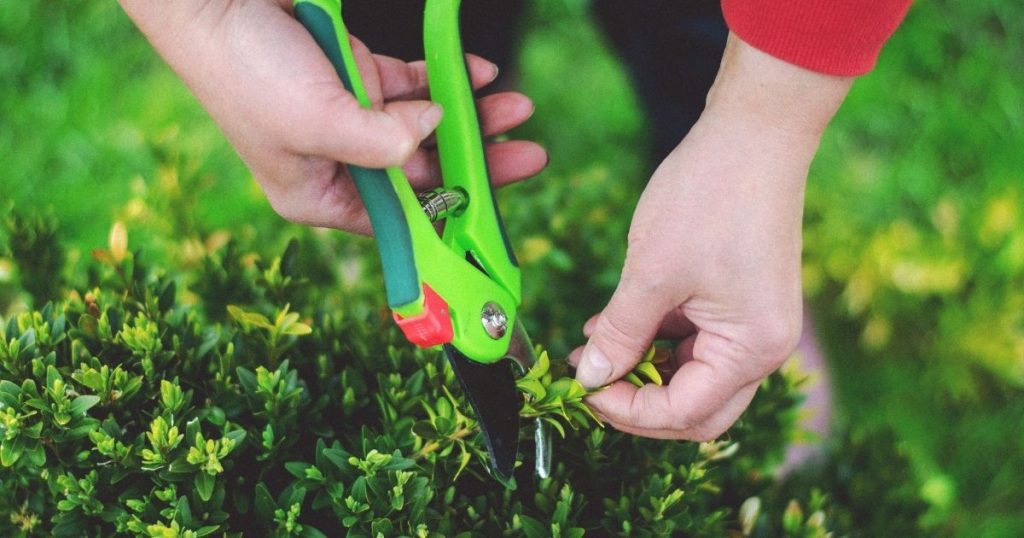
Once those foundations are in place, antimicrobials can act more like gentle pruning than trying to clear the entire garden. The goal isn’t to sterilise the small intestine. Instead it’s to help nudge an already healthier ecosystem back towards balance.
In my experience, that approach makes far more sense than trying to force change in an environment that isn’t yet ready to maintain it. This is something I spend a lot of time exploring in clinic because the right timing varies from person to person.
Does this mean antimicrobials don’t have a place?
Not at all – antibiotics and herbal antimicrobials can absolutely be useful and it is true that some people experience significant improvements with them.
That said, I don’t think antimicrobials cure SIBO on their own. The problem isn’t the treatment itself. It’s expecting one treatment to correct every process that contributed to SIBO in the first place. In my own clinical experience, around 4/5 people don’t require antimicrobials when the other drivers of their symptoms have been properly addressed.
My experience of antimicrobials
When I first developed SIBO, I completely bought into the idea that I just needed to find the right antimicrobial. I worked my way through oregano oil, berberine, neem, several herbal combination products and eventually allicin. Every time I started a new protocol, I felt hopeful that this would finally be the one that turned everything around.
Instead, my symptoms repeatedly became worse. My abdominal pain increased, my food reactions became more severe, and my nervous system felt increasingly overwhelmed. Each time this happened, I assumed SIBO treatment wasn’t working because I simply hadn’t found the right antimicrobial yet, so I moved on to the next one.
Looking back, I see things very differently. The problem wasn’t that I’d chosen the ‘wrong’ herbs. I was trying to force changes in my microbiome before addressing everything else driving my symptoms. With every antimicrobial course, I was depleting my microbiome further without rebuilding it. My digestion, motility, inflammation and nervous system simply weren’t in a place where antimicrobial treatment was likely to create lasting improvements.
That experience completely changed the way I think about SIBO treatment and the approach I now take in clinic.
To sum up
If your SIBO treatment isn’t working, it doesn’t automatically mean you need stronger herbs, another antibiotic, or a longer protocol.
For many people, SIBO treatment isn’t working because too much attention has been placed on removing bacteria, and not enough on creating a gut environment that can stay healthy once they’re gone.
It may simply mean you’re asking antimicrobials to do a job they were never designed to do. In my view, antimicrobials don’t cure SIBO. They can reduce bacterial numbers, and for some people that may be enough if the underlying gut environment has already started to recover. But for many others, lasting improvement comes from creating an environment where the gut can maintain balance for itself. That’s where I believe treatment should begin.
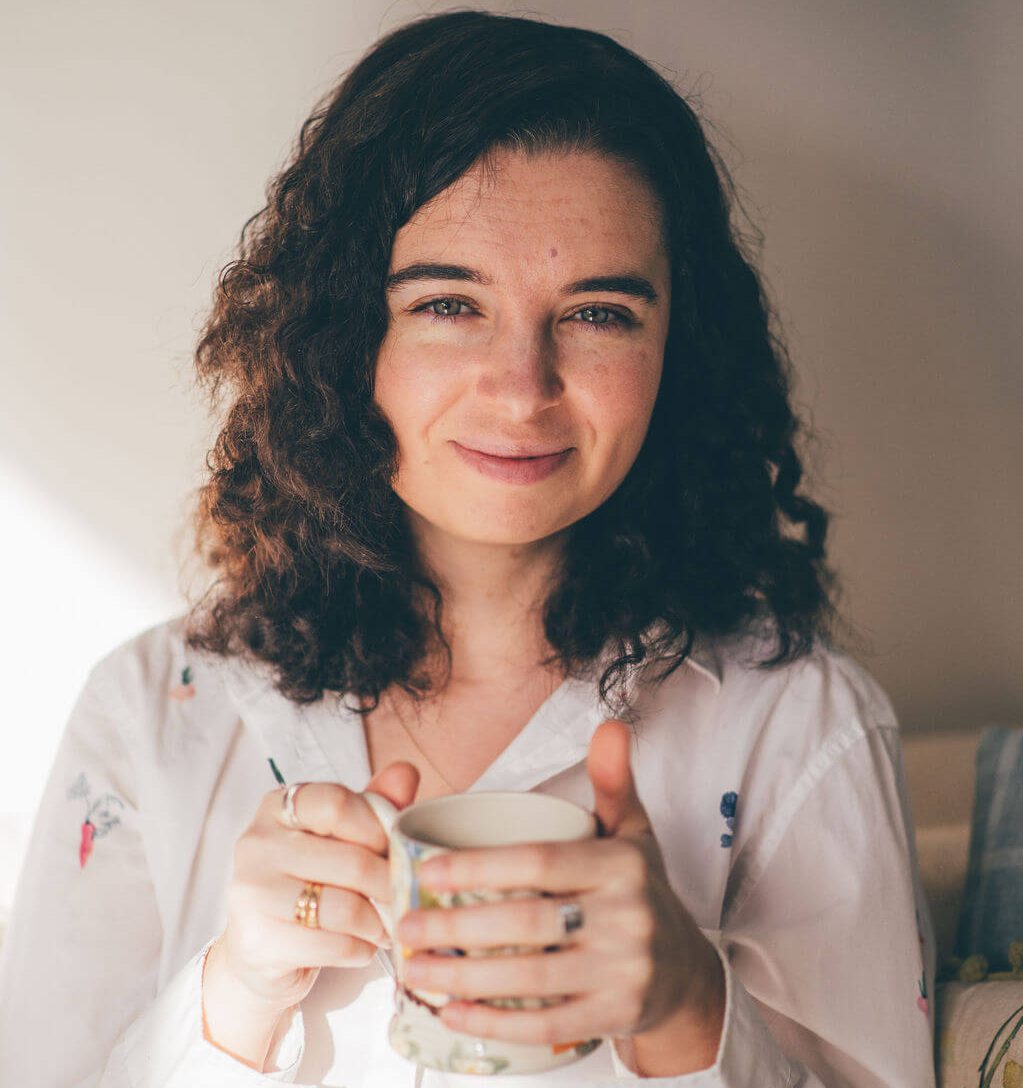
I’m Lucy, a Nutritional Therapist specialising in gut health, including SIBO, IBS, functional dyspepsia and histamine-related symptoms. I work with people who feel stuck with ongoing digestive issues despite trying diets, supplements, or standard protocols. My approach focuses on identifying root causes and restoring gut function, alongside supporting the nervous system, rather than relying on restrictive or short-term fixes.
If you’re struggling with persistent gut symptoms and not getting answers, you can book a free gut support call to discuss what you’re experiencing and whether one of my programmes could be the right fit for you.
References:
- https://pmc.ncbi.nlm.nih.gov/articles/PMC6494866/
- https://pubmed.ncbi.nlm.nih.gov/18802998/
- https://www.cghjournal.org/article/S1542-3565(23)00452-4/fulltext
- https://journals.sagepub.com/doi/10.1177/20499361231154443
- https://www.ovid.com/jnls/ajg/fulltext/10.14309/ajg.0000000000000501~acg-clinical-guideline-small-intestinal-bacterial-overgrowth